
Writing Difficulties (Dysgraphia):
What You Don’t Know About the Hidden Challenge Our Children Face
Introduction
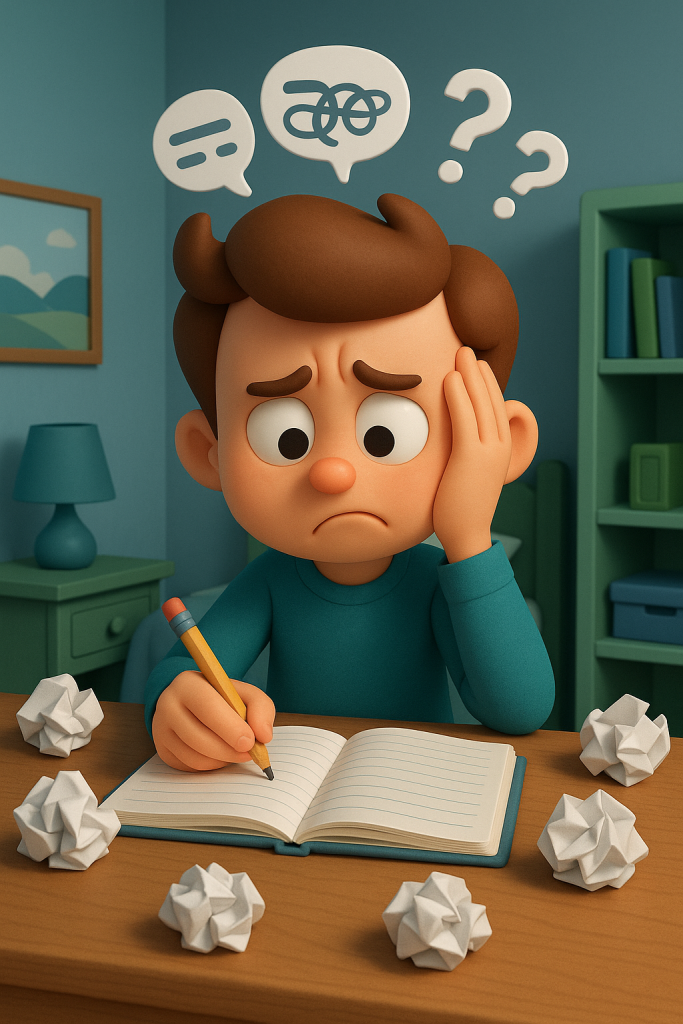
In an era where the pace of education is accelerating and evaluation methods are diversifying, handwriting remains one of the fundamental pillars by which a student’s performance and self-expression are measured. But what if writing itself is the obstacle? Imagine a child with brilliant ideas and normal cognitive abilities who struggles every time they pick up a pen! Letters falter between their fingers, words get lost in illegible scribbles, creating a gap between what they know and what they can express. We’re not talking about negligence or laziness, but about “writing learning difficulties” or what is scientifically known as “dysgraphia”—one of the often-overlooked learning disorders, despite its deep psychological, academic, and social impact on children. In this article, we shed light on dysgraphia from a scientific, educational, and awareness-based perspective to inform parents, specialists, and those involved in caring for children with special educational needs about its definition, symptoms, diagnostic methods, and appropriate intervention and support mechanisms.
What Is Writing Difficulty (Dysgraphia)?
Dysgraphia is a specific learning disorder that affects a child’s writing skills, including the ability to form letters, organize sentences, and control lines and spacing, in addition to difficulties in spelling and written expression. This condition is not linked to low intelligence, poor vision, or lack of motivation, but rather to a dysfunction in the cognitive and fine motor processes related to writing. The American Psychiatric Association (APA, 2022) defines specific learning disorders, including dysgraphia, as disorders that significantly and persistently affect one or more areas of reading, writing, or mathematics, despite the availability of appropriate learning opportunities and motivation.
When Do Symptoms of Writing Difficulties (Dysgraphia) Appear?
Symptoms typically begin to appear between the ages of 5 and 7, as formal writing instruction begins in early primary education. However, some early signs may appear at a younger age, such as difficulty holding a pencil, slow coloring within shapes, or resistance to writing activities.
Symptoms by Age Group:
Ages 5–7:
- Difficulty controlling the pencil (unstable grip).
- Irregular lines and disconnected or reversed letters.
- Quick fatigue from writing. Refusal to engage in writing or drawing activities.
Ages 8–12:
- Very slow writing.
- Illogical arrangement of words in sentences.
- Frequent spelling mistakes despite understanding the word orally.
- Use of simple words to avoid writing errors.
Ages 13 and above:
- Completely illegible handwriting.
- Difficulty organizing thoughts in writing.
- Excessive reliance on verbal explanations instead of writing.
- Noticeable anxiety when performing writing tasks.
Prevalence of Writing Difficulties (Dysgraphia)
Studies indicate that writing learning difficulties affect between 5% and 20% of children, making it one of the most common learning disorders after dyslexia. Among children with learning difficulties, the prevalence may reach 30–40%, appearing more frequently in males at a ratio of up to 3:1 compared to females.
Diagnosing Writing Difficulties (Dysgraphia)
Diagnosis requires a comprehensive assessment by a multidisciplinary team, including an educational psychologist, a special education teacher, an occupational or speech therapist, and the child’s parents and teachers (through interviews and observation). Diagnosis relies on fine motor skill tests, assessments of written thought organization, handwriting, spelling, and functional writing evaluations, classroom observation, and performance records. Early diagnosis is key to successful intervention and is a critical factor in minimizing the academic and psychological impact on the child.
Impact of Writing Difficulties on the Child
Academically:
Persistent decline in achievement, especially in writing-based subjects, and poor performance evaluations due to weak written expression.
Psychologically:
Loss of self-confidence, frustration, and avoidance of school assignments.
Socially:
Exposure to ridicule or bullying due to “bad handwriting,” feelings of inferiority, and withdrawal from activities.
Intervention Strategies by Age Group:
Ages 5–7:
- Fine motor exercises (playdough, cutting, blocks).
- Tracing lines and dots.
- Fun letter-writing activities using colors and sensory materials.
Ages 8–12:
- Handwriting improvement and spacing organization exercises.
- Use of assistive tools such as lined paper and special pens.
- Incorporating technology: typing or using supportive software.
Ages 13 and above:
- Teaching strategies for organizing ideas (like mind maps).
- Focused occupational therapy sessions.
- Use of alternative tools (recordings, digital writing).
- Psychological support to boost motivation and reduce writing-related anxiety.
Practical Tips for Parents of Children with Dysgraphia
Do not blame the child for delays, and celebrate progress no matter how small. Provide a supportive and safe environment free from comparisons or bullying. Regularly monitor the child’s assessment and update support plans. Make writing a fun daily activity, like journaling or describing something they love. Collaborate with the school and inclusion teachers to ensure consistency between home and school plans. Remember that “good handwriting” is not a measure of intelligence, but a skill that can be developed through practice and support.
Conclusion:
Ultimately, we must treat dysgraphia not as a flaw in the child, but as a learning challenge that can be overcome with early support and proper care. Every child is capable of success in their own way—if only they find someone who believes in them and helps them overcome the barriers standing between them and their true potential. Do you think your child or one of your students may be struggling with writing difficulties? Don’t hesitate to seek support, and share this article with anyone who might benefit from it. Leave us a comment or contact us directly through our specialized pages—we are here to provide you with practical support and accurate information based on the latest scientific research. Share your experiences and questions with us, and we’ll work on preparing dedicated episodes and materials to respond and help you.
Scientific References:
American Psychiatric Association. (2022). Diagnostic and Statistical Manual of Mental Disorders (DSM-5-TR).
Berninger, V., & Wolf, B. (2016). Teaching Students with Dyslexia and Dysgraphia: Lessons from Teaching and Science. Paul H. Brookes Publishing.
Mayes, S. D., & Calhoun, S. L. (2007). Learning, Attention, Writing, and Processing Speed Disorders in Children with ADHD. Journal of Attention Disorders.
Sousa, D. A. (2011). How the Brain Learns to Write. Corwin Press.
Abdel-Fattah, H. (2019). Academic and Developmental Learning Difficulties: Diagnosis and Treatment. Dar Al-Fikr Al-Arabi, Cairo.
Shawqi, M. (2021). Writing Difficulties in Children: Causes and Intervention Methods. Arab Journal of Special Education, Issue 15.
- Subscribe to our [YouTube Channel] and follow us on [Facebook] for more expert content on disability, autism, and learning difficulties.
- Share this article with those who care.