
Reading Difficulties (Dyslexia)
Introduction
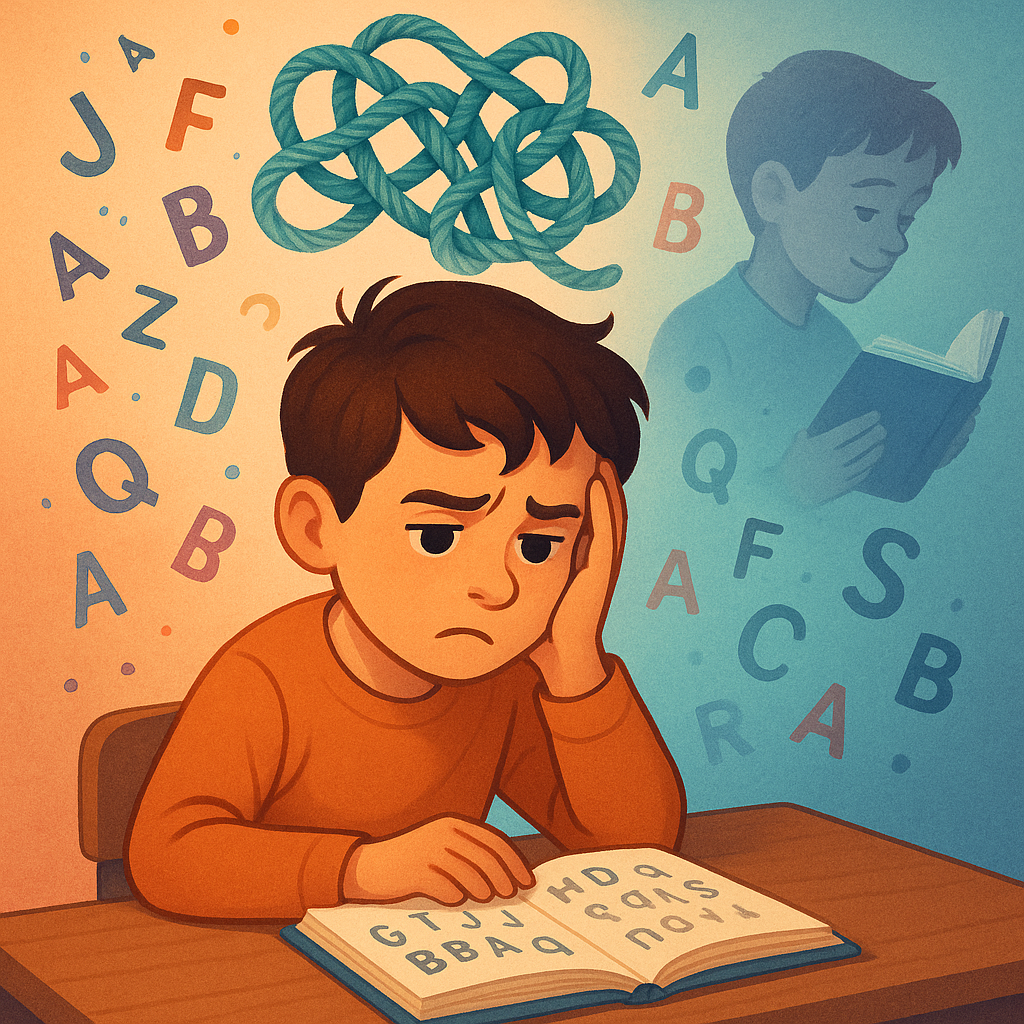
It can be puzzling to see a bright, curious child who speaks fluently and has a vivid imagination but struggles noticeably when reading words, mixes up letters, or avoids reading as if it were a punishment. Such a child might be called “lazy” or “not focused,” but in reality, they may be dealing with a reading difficulty known as Dyslexia. In this article, we will explain what dyslexia is, how to detect it early, and the support strategies that can truly transform a child’s learning journey.
1. What is Dyslexia (Reading Difficulty)?
Dyslexia is a developmental neurological disorder that affects how a child processes written words. It leads to challenges in recognizing letters and words, linking letters to their corresponding sounds, spelling, fluent reading, and understanding texts. It is important to know that these difficulties are not related to the child’s intelligence—many children with dyslexia are highly intelligent and excel in other areas.
2. When Do Symptoms of Reading Difficulties Appear?
Signs of dyslexia usually appear between ages 4 to 6 but become more evident during the early school years. Unfortunately, many parents and teachers mistake these signs for laziness or typical delays, which delays proper intervention.
3. Types and Symptoms by Age Group
Ages 4–6:
Difficulty recognizing letters and their names
Letter reversals (e.g., confusing “b” and “d”)
Trouble connecting sounds to letters
Delays in building vocabulary
Ages 7–12:Slow reading pace
Adding or omitting letters when reading
Difficulty reading unfamiliar words
Poor reading comprehension
Frequent spelling mistakes due to sound confusion
Age 13 and above:Avoiding reading tasks
Choppy or hesitant reading
Struggles with complex texts
Poor writing and academic performance
4. Prevalence and Demographic Impact
Dyslexia affects 5% to 15% of children worldwide
It is 2–3 times more common in boys than girls
Around 70–80% of students diagnosed with general learning difficulties specifically struggle with reading
5. How is Dyslexia Diagnosed Scientifically?
Diagnosis is carried out by a specialized team, including educational psychologists, learning difficulty specialists, and speech therapists. The evaluation involves IQ tests (to identify the gap between ability and performance), reading and comprehension assessments, phonemic awareness analysis, classroom observations, parent interviews, and developmental history review.
6. Academic, Psychological, and Social Impact
Academically:
- Difficulty understanding instructions
- Poor performance in reading-based subjects
- Low grades
Psychologically:
- Low self-esteem
- Frustration and social withdrawal
- Sometimes shows resistance or aggressive behavior
Socially:
- Bullying or ridicule from peers
- Constant comparison with classmates
- Persistent feelings of failure
7. Effective Interventions by Age
Ages 4–6:
- Sensory activities to develop phonemic awareness
- Educational games to teach letters and sounds
- Using picture books to attract interest
Ages 7–12: - Structured phonics programs like Orton-Gillingham or Jolly Phonics
- Exercises to strengthen auditory and visual memory
- Integrating images and sounds with words
- Ongoing psychological support
Age 13 and above: - Using assistive tools such as audiobooks
- Practice with fluency and comprehension (e.g., Lexia or Read&Write)
- Social and emotional support, and coping skills
8. Practical Guidelines for Parents
- Observe early signs and request professional evaluation
- Never blame or mock the child’s mistakes
- Celebrate small achievements
- Read aloud with your child daily
- Collaborate with teachers and specialists
- Set aside time for joint reading
- Join awareness programs if available
- Give your child time and patience
- And always remember: Your child is not refusing to learn… they just need a different way of learning
Conclusion:
Dyslexia is not a failure—it’s simply a different way of processing information. The key to success lies in understanding, early diagnosis, and ongoing support. Whether you’re a parent, teacher, or specialist, share this article—it could make a big difference in a child’s life.
📩 Do you have a question or experience? Share it with us in the comments so we can address it in upcoming articles and videos.
📚 Reach out to us on our website to access free screening tools and professional consultations.
References:
- Shaywitz, S. (2020). Overcoming Dyslexia
- American Psychiatric Association. (2022). DSM-5-TR
- Snowling, M. & Hulme, C. (2019). Developmental Disorders of Language Learning
- Torgesen, J. K. (2006). National Reading Panel
- Egyptian Ministry of Education (2021)
- Arab Learning Difficulties Network (2022–2024)
- Subscribe to our [YouTube Channel] and follow us on [Facebook] for more expert content on disability, autism, and learning difficulties.
- Share this article with those who care.