
Inclusive Education and School Integration
Introduction
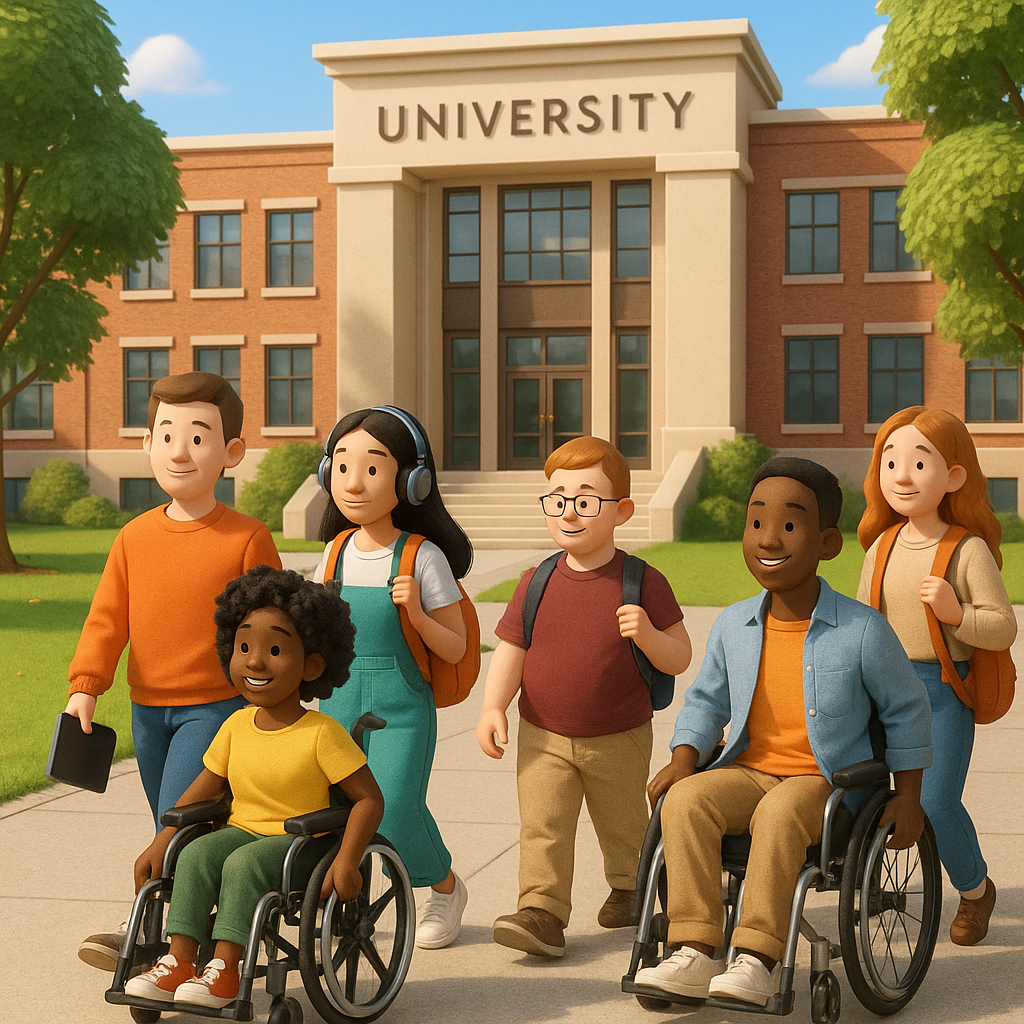
Higher education is no longer reserved for a privileged few—it is a fundamental human right protected by international conventions and national laws. University inclusion has become a cornerstone for achieving educational equity and equal opportunities, particularly for students with intellectual disabilities, developmental disorders, and learning difficulties. Universities are not merely spaces for academic learning; they serve as a pivotal transition toward independence and as a gateway to active participation in the labor market and society.
1. Concept of University Inclusion
University inclusion means enabling students with disabilities to participate fully in all aspects of university life—academic, social, and psychological—by providing reasonable accommodations that ensure both learning and active engagement.
UNESCO (2023) emphasizes that inclusive higher education is not an optional service but a human right and a prerequisite for sustainable development. It encompasses lecture halls, student activities, societies, and all campus services.
2. Transition from School to University
Successful inclusion in higher education requires a structured transition plan beginning in secondary school, including:
Training in life skills (transportation, time management, study organization).
Exposure to “mini-university” environments (summer courses, trial programs).
Training in assistive technologies (text-to-speech software, organizational apps).
The American Psychological Association (APA, 2023) stresses that structured transition planning significantly increases the likelihood of student success in higher education.
3. Requirements for University Inclusion
Inclusive infrastructure: Accessible lecture halls, visual and auditory aids, adapted facilities.
Academic support services: Learning support centers, extended test time, assistive technologies, academic aides when needed.
Psychological and social support: Counseling, peer support groups, communication and integration skills development.
Community partnerships: Collaboration between universities, families, and specialists.
4. Target Groups for Inclusion
Students with mild to moderate intellectual disabilities.
Students with high-functioning autism.
Students with learning difficulties (dyslexia, dyscalculia).
Students with ADHD.
According to WHO & World Bank (2022), these groups can succeed in higher education if proper accommodations are provided.
5. Preparing Students for University Inclusion
Academic skills: Active learning strategies, improved reading and writing.
Life skills: Time management, navigating transportation, handling personal finances.
Social skills: Communication, building friendships, coping with challenges.
Career skills: Practical training and volunteering as preparation for the labor market.
6. Choosing the Right College
College selection should consider:
The student’s abilities (through assessment tools).
Personal interests.
Labor market opportunities.
OECD (2023) notes that inclusion is often more effective in applied and vocational colleges.
7. Support Roles within the University
Families: Encourage independence, monitor from a distance, and contribute to individualized support plans.
Specialists: Offer pre-university training, raise awareness among faculty and students, and provide ongoing psychological support.
Peers: Act as “peer mentors,” promoting a culture of acceptance and inclusion.
Alnahdi (2023) found that peer mentoring programs significantly increase academic and social success in inclusive universities.
8. University Inclusion and the Labor Market
University is not the final destination but a launching point. Internships and applied projects strengthen employability.
According to ILO (2023), inclusive higher education increases employment rates among people with disabilities by up to 40%.
Conclusion
University inclusion is not a luxury but a real investment in the potential of young people. It is a bridge toward greater independence and meaningful participation in both society and the workforce. Success in this endeavor requires genuine cooperation among students, families, universities, and communities.
Discussion point: What challenges do you see in achieving university inclusion? Do you know of a university or successful model worth following? Share your thoughts and spread this article to raise awareness.
References
Arabic References
Ministry of Education (Egypt) (2020). Guidelines for Integrating Students with Disabilities in Universities and Schools. Cairo.
Higher Council for the Rights of Persons with Disabilities (Jordan) (2021). National Guide for Inclusive Education. Amman.
UNESCO Beirut Office (2022). Inclusive Education in the Arab Region: Challenges and Opportunities. Beirut.
Foreign References
UNESCO (2023). Guidelines on Inclusive Higher Education. Paris.
WHO & World Bank (2022). World Report on Disability and Higher Education. Geneva.
APA (2023). Transition to Higher Education for Students with Developmental Disabilities. Washington, DC.
OECD (2023). Higher Education and Employability of Students with Disabilities. Paris.
ILO (2023). Employment Pathways for Persons with Disabilities. Geneva.
Alnahdi, G. H. (2023). Peer Mentoring and Inclusive University Education. International Journal of Inclusive Education.
Carter, E. W., & Gustafson, J. R. (2022). Supporting College Students with Intellectual and Developmental Disabilities. Routledge.
- Subscribe to our [YouTube Channel] and follow us on [Facebook] for more expert content on disability, autism, and learning difficulties.
- Share this article with those who care.